The Rivalry Between the Husband and the Radiologist
Die, My LoveThe rivalry between The Husband and The Radiologist is the novel's central male conflict, a struggle over The Narrator that unfolds less as a conventional duel of words or blows and more as a silent, almost wordless contest of possession. It is the engine that drives her infidelity into the open, precipitates her commitment to the psychiatric institution, and culminates in a mysterious agreement between the two men that decides her fate without her participation. The rivalry is marked by a strange asymmetry: The Husband is consumed by jealous suspicion and violent interrogation, while The Radiologist remains a shadowy, almost mythic figure whose power over The Narrator is described in terms of animal predation and absolute invasion. Their conflict never erupts into the open confrontation The Narrator anticipates; instead, it dissolves into a quiet pact that leaves her standing on the roadside, a possession traded between two men who have, in the end, understood each other perfectly.
Origins and the Poison of Suspicion
The rivalry is born not from a single event but from two simultaneous beginnings: a toxic dream and the discovery of condoms in the car's glove compartment, melted by the sun of the infernal summer that had just ended. The Husband, having dreamt of finding The Narrator in bed with the neighbour, confronts her with a mixture of tearful confession and accusatory questioning. He cries all morning over the dream, yet his real grievance is the physical evidence: the condoms in the glove compartment, which he takes as proof of her infidelity. The Narrator, for her part, denies everything, adhering to the cynical principle that one should deny everything even when faced with the evidence, going so far as to say she would deny who she is if it came to it. The Husband's suspicion fastens onto a specific figure: the neighbour who showed up in the middle of the night and drives by every day on his damned motorcycle. The Narrator's refusal to name him only deepens the poison. She feels his gaze like a kitchen knife on her throat each time he comes closer, and she describes the affair in terms that make plain why she cannot confess: he entered her like a snake enters a crocodile's mouth, devouring her slowly and irrevocably, making space for himself with one slash of a machete. The confrontation escalates from the boring speech about jealousy into kicks, blows, and banal insults, until The Narrator runs outside and, for the very first time, crashes straight through the glass.
The Husband's Transformation and the Radiologist's Shadow
The rivalry transforms The Husband in ways that disturb The Narrator more than his violence. When he screws her, she blinks and it is like they have felled a tree, like the blow of an axe. He becomes unrecognizable, as though he has taken notes, screwing her against the wall the way she wants it, with her hands tied as requested. He calls her whore, and his mouth fills up with furious, polluted water. These are not his words, The Narrator observes; he has learnt them from having watched the other. The rivalry has made him a copy of his rival, a tautologically little husband with a new lease of life, the lad actually woken up. Yet this transformation is useless to her. She tries to belong to him, offering him her scalp, her brain, her stretched skin, her eyelids, but she looks at him with the surprise of a stranger. The rivalry has not brought her back to him; it has only made him a pale imitation of the man who actually possesses her. The Radiologist himself remains a figure of overwhelming, almost inhuman force. The professional at the institution tells The Narrator that The Husband feels powerless against the figure of the unknown man, who is like a bulldozer. The air in her house is turning foul, and the professional has recommended she stay another week, a decision discussed entirely behind her back. The rivalry has thus become a matter of institutional management, with The Narrator grounded and asked to rethink her role as a wife and as a mother.
The Confrontation at the Radiologist's House
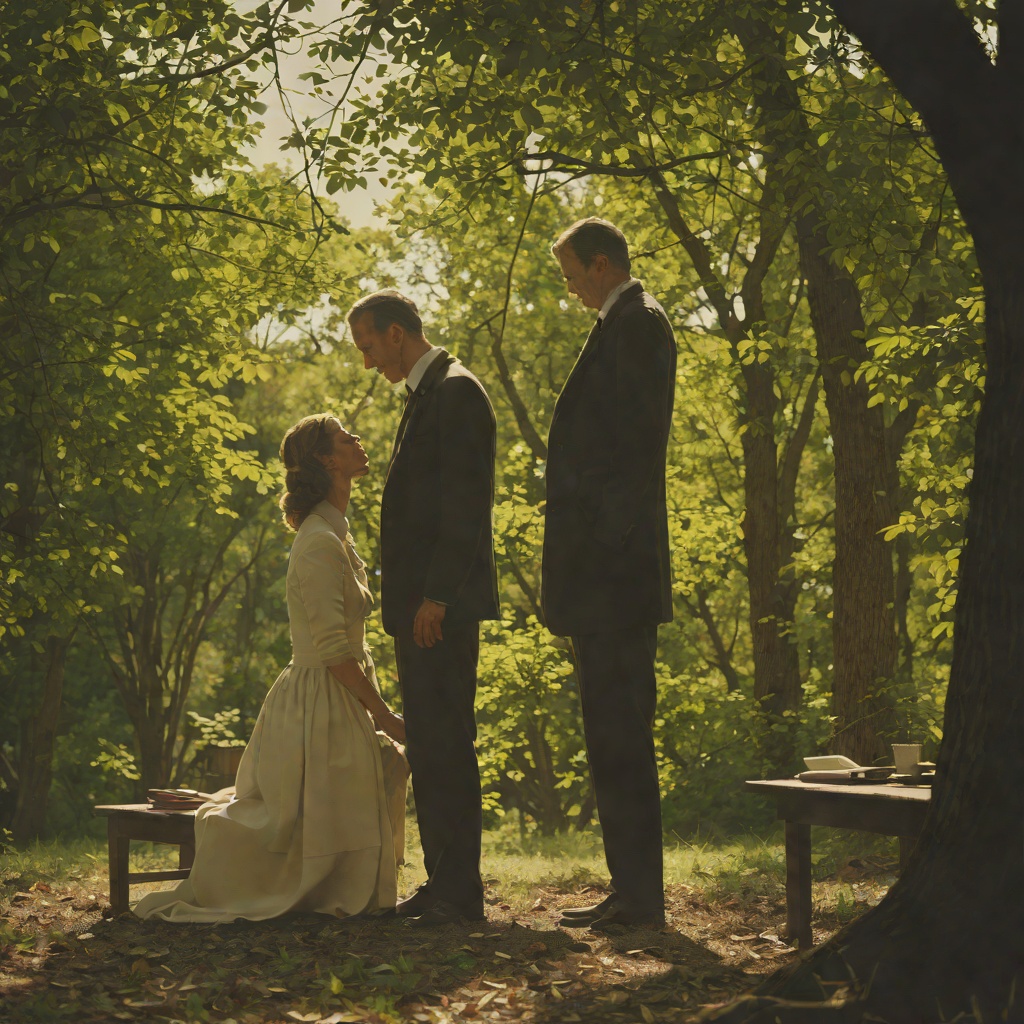
The rivalry reaches its strange resolution at The Radiologist's house, where The Narrator has gone to find him. She arrives to find his princess in the window but no one else around, and she searches every room, looking at the bed they fuck in, at their bathroom, at his toothbrush, at everything he looks at from the minute he gets up, before collapsing into the embroidered armchair. She falls asleep and dreams of the sweet and hollow sound of an antler, of him on his back, his hair stuck to her skin, until she hears giggles and sees him and his wife returning down the path, their baskets overflowing with mushrooms. The wife looks at The Narrator with horror, and The Radiologist gestures for her to go upstairs to their little girl before taking The Narrator by the arm. They walk fifty yards away, maybe more, and stand face-to-face without saying a thing. They kiss, and The Narrator sees his face change, maybe he is looking at the marks left by the glass. Her tongue on his tongue is a painkiller, and she knows that is the reason, that is why he is kissing her: it is so powerful, that kiss, that taste of salty blood, that stopping of death in its tracks. It is at this moment that The Husband arrives, on a motorcycle that is too small for him and makes him look like he is fourteen. The Narrator sees her two bulls, her stallions, her pawns, suddenly together. No words are needed. The two men understand each other with gestures alone and off they go together into the open fields, stopping where she cannot hear them.
The Agreement and the Silence
From a distance, The Narrator watches the shadow cast by their bodies, the profiles of the two of them facing each other. Mother and daughter appear at the window, one paler than the other. She watches them squaring up for the duel, but then the tension dissipates and it is like two long-lost brothers catching up, reminiscing about their childhood in the family home, discussing how to settle their dead parents' debts. The sun begins to set over their heads, the gentle light of dusk slowly tinting their bodies, and a soft, steady rain falls on them. As they talk, The Narrator feels her life come and go. She does not know what is being said, only that they are not raising their voices any more. Something about the way they step a little to the side, the way they nod their heads slightly, tells her they have understood each other. One of them yawns. The other laughs. They have reached an agreement. The Siamese twins part, and one of them comes towards her. She is trembling, wondering who it will be, who will be her black-market buyer, what will become of her life, in which home she will live, what they will call her, whoever has chosen her. He coughs, and she knows it is her husband, the most loyal of the two. The rivalry has not ended in a duel but in a transaction, and The Narrator has been the object traded.
Aftermath: The End of the Rivalry
The Husband and The Narrator walk towards the open-top car in silence, a silence more complete than all those that had come before it. As they drive home in the rain, she notices a row of cypresses and asks if they are new; he tells her they have always been there. He does not stop at the front door, and she can tell the party is over because a few blue balloons are drifting over the minefield that is their garden. She asks if the baby is asleep inside, and he tells her he is not a baby any more, but what she understands is that he is not her baby any more. They drive into the woods, the wheels leaving tracks in the earth, and he turns off the engine and relaxes, letting out a breath he has been holding in for too long. He asks her what she wants to do, a question she had not been expecting; she had thought the outcome had been positive or negative, and that he would tell her how much time she had left, in weeks, in days. She cannot say a word. He tells her he will not be able to forget, and for the first time he is serious. Then he lights a cigarette and says, besides, they are expecting a child. Two, actually. They are having two tiny twins. The two of them sit there laughing together for the very last time like a happily married couple, and The Narrator gets out without opening the door, noting that the convertible happens to be a very practical model for break-ups. The rivalry has ended not with a victor but with a double abandonment: The Radiologist has chosen his wife and their coming twins, and The Husband has chosen to let her go. The Narrator is left in mourning, feeling the kind of pain a person does not share, not even with herself, until there comes a moment when, like the widow who unlocks her front door for the first time, she begins to live alone.